A name that carries weight
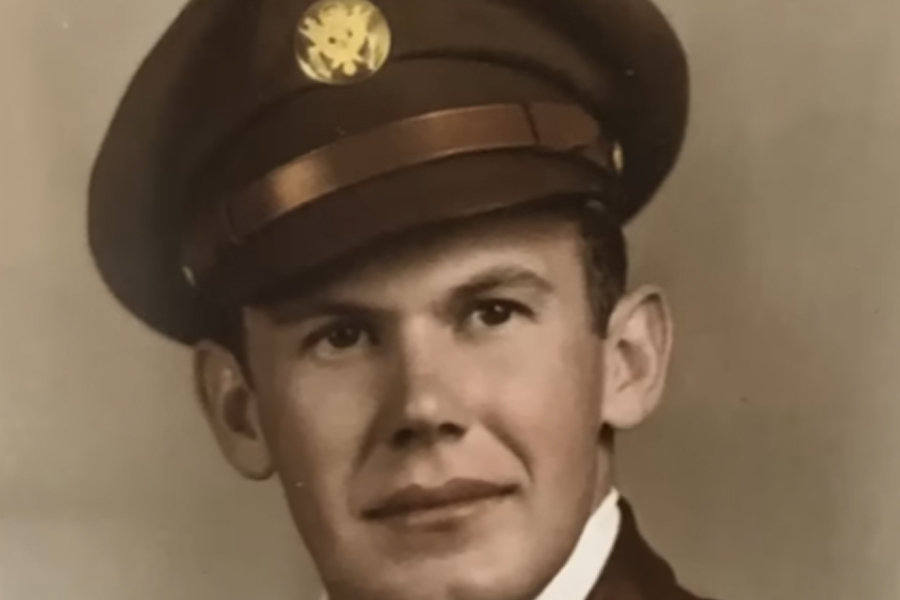
I think William Frank Hanson is one of those figures who stands in the background of a family story like the frame around a painting. The frame is easy to overlook at first. Then the more I look, the more essential it becomes. He is best known as the father of Victor Davis Hanson, the historian, author, and commentator whose work has reached a wide audience. But William Frank Hanson was not only a parent in the shadow of a famous son. He was a veteran, an educator, a husband, and the center of a family line that stretches across generations.
What makes his story interesting is that it is both ordinary and memorable. Ordinary, because much of his life was lived away from the spotlight. Memorable, because the family that grew around him became a living archive of California, education, service, and scholarship. His life reads like a sturdy bridge over a dry riverbed, plain in shape but crucial in function.
William Frank Hanson was born on 22 October 1921 in California, in the Fresno and Selma region that would remain tied to the family story for decades. He died on 18 July 1998 in Selma, Fresno County, California. Those dates matter because they place him firmly inside the long arc of 20th century American life, from the interwar years through World War II, the rise of postwar education, and the transformation of the Central Valley.
Family roots and personal ties
The family structure around William Frank Hanson is clear enough to sketch, even if some details are better documented than others. His parents were Frank J. Hanson and Fannie Alice Carter. That makes William Frank Hanson part of an older line that predates the public attention attached to the Hanson name today.
His wife was Pauline Georgia Davis. Their marriage joined two family branches that would remain closely associated with one another for generations. In this family, names recur like echoes in a canyon. That repetition can be confusing, but it also tells me something important: the family valued continuity, memory, and the carrying forward of names.
The children publicly linked to William Frank Hanson include Georgia Ann Hanson, Nels Frank Hanson, Victor Davis Hanson, and Alfred Davis Hanson. Each of these names belongs to a wider family map, but Victor Davis Hanson is the one most familiar to the public because of his career and visibility. Still, the others matter because a family is not a single bright lantern. It is a row of lamps, some shining more strongly than others, each part of the same line of light.
Georgia Ann Hanson appears in the family record as an early child. Nels Frank Hanson and Alfred Davis Hanson appear in the broader family listings as well. Victor Davis Hanson, born in 1953, later became the family member most associated with public scholarship and commentary. When I look at this household, I do not see a single famous father or son. I see a family that built itself through work, resilience, and a strong sense of identity.
Among the grandchildren associated with this line are Pauline Davis Hanson Steinback, William Frank Hanson, and Susannah Merry Hanson. The presence of a grandson named William Frank Hanson adds another layer of repetition to the family tree, almost like a river bending back toward its source. Susannah Merry Hanson also appears in the family record, and the name Pauline Davis Hanson Steinback ties the next generation back to the older Davis branch. These repeated names can make the family structure feel like a hall of mirrors, but the pattern itself is part of the story.
Career, service, and a life of steady work
William Frank Hanson’s career is described in public materials as that of a junior college administrator, and he is also referred to as a community college superintendent. Those titles suggest a life spent in education, administration, and public service. I picture long days filled with schedules, personnel concerns, student needs, and the quiet machinery that keeps an institution running.
That kind of work rarely produces dramatic headlines. It is more like irrigation than fireworks. It does not shout, but it sustains. A junior college administrator stands in the middle of a web of practical decisions, balancing people, budgets, and the daily demands of education. In that sense, William Frank Hanson’s career seems to have been built on steadiness rather than spectacle.
He was also a World War II veteran. Victor Davis Hanson has written about his father’s wartime service, describing him as a B-29 gunner who flew nearly 40 missions over Japan. If that account is read as part of the family memory, then William Frank Hanson’s life includes a chapter of danger and discipline that shaped the rest of the family story. War leaves fingerprints on every generation that follows. Even when it is not discussed often, it changes posture, tone, and expectation.
I find it meaningful that this wartime background and his later work in education sit side by side. That combination tells me he lived through two very different American worlds: the world of combat and the world of classrooms. One demanded courage under fire. The other demanded patience, order, and the ability to guide others without needing applause.
The family legacy through Victor Davis Hanson
Because Victor Davis Hanson’s public life popularized the family name, William Frank Hanson cannot be discussed without him. As a historian, classicist, and pundit, Victor wrote about agriculture, war, culture, and modern life’s expenses. Family typically acts as a seedbed, but that intellectual path does not explain William Frank Hanson. What grows depends on soil.
Victor remembers his father as direct and disciplined. Victor remembers William Frank Hanson as a man who valued action above delay with the expression “barrel ahead.” That seemed like a reasonable ethic for warfare and the harder labor of developing a family and profession.
Daughter Susannah Merry Hanson’s obituary helps illustrate future generations. Married couples, children, and grandchildren become more visible there. Names don’t just collect. They branch. They multiply. They map kinship.
A timeline of one family life
A few dates describe William Frank Hanson’s life.
In 1921, he was born into a generation of economic suffering and global war.
His 1947 marriage to Pauline Georgia Davis stabilized the family for decades.
Victor Davis Hanson, born in 1953, would make the family name famous.
In 1998, William Frank Hanson died in Selma, close to the family.
These dates are few, yet they reflect a life of formation, service, and legacy. Real life transpired between the dates—daily routines, decisions, sacrifices, and familial secret labor.
FAQ
Who was William Frank Hanson?
William Frank Hanson was an American educator, administrator, World War II veteran, husband, father, and grandfather. He is best known publicly as the father of Victor Davis Hanson.
Who were his parents?
His parents were Frank J. Hanson and Fannie Alice Carter.
Who was his wife?
His wife was Pauline Georgia Davis.
What was his career?
He is described as a junior college administrator and a community college superintendent.
Did he serve in World War II?
Yes. Family accounts describe him as a B-29 gunner who flew nearly 40 missions over Japan.
Who were his children?
The publicly listed children include Georgia Ann Hanson, Nels Frank Hanson, Victor Davis Hanson, and Alfred Davis Hanson.
Who are the grandchildren connected to him in the public record?
The family line includes Pauline Davis Hanson Steinback, William Frank Hanson, and Susannah Merry Hanson.
Why is his name repeated in the family?
The family appears to have carried names forward across generations, which is why William Frank Hanson appears both as an elder family member and again in the younger generation.